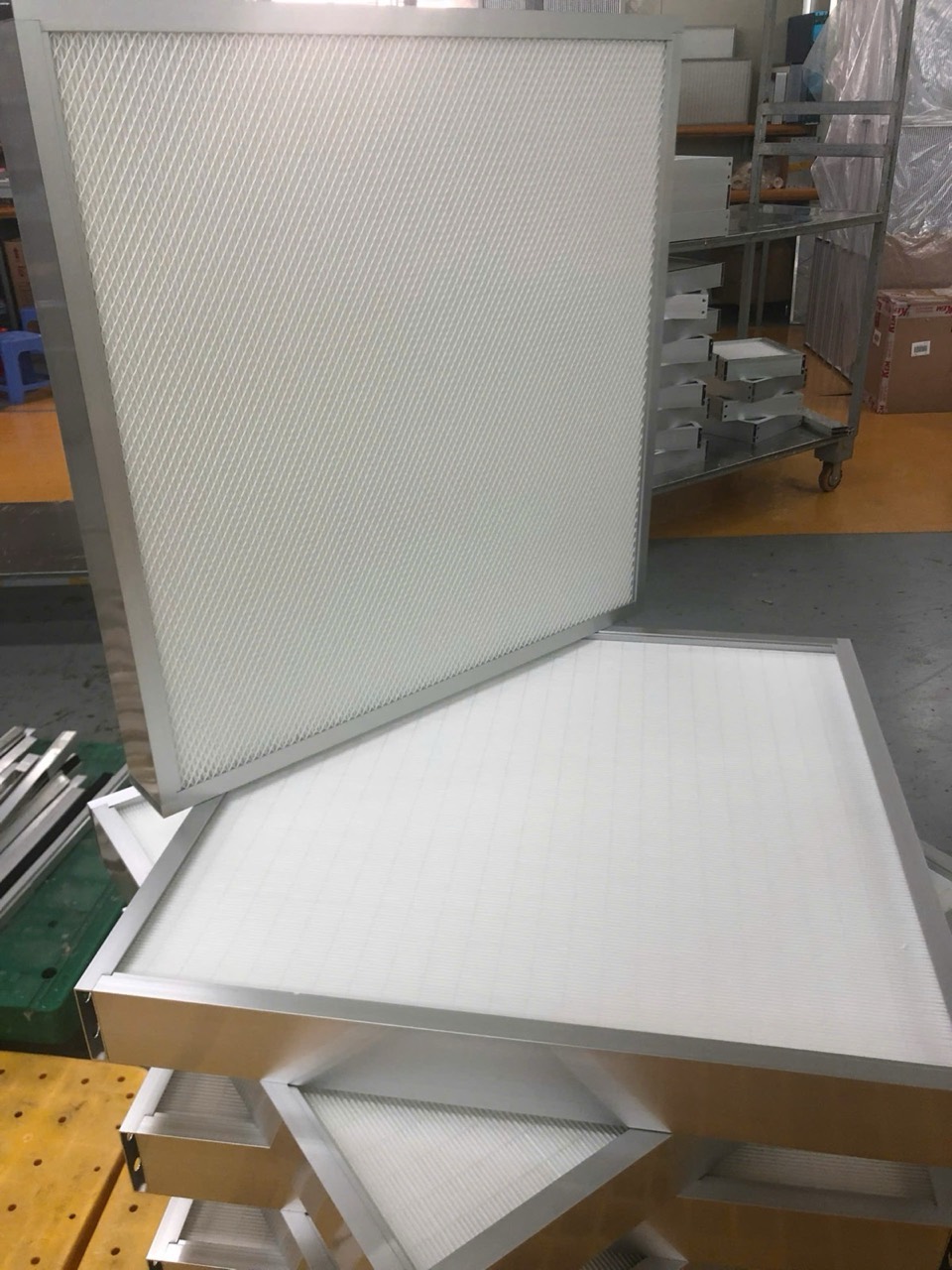

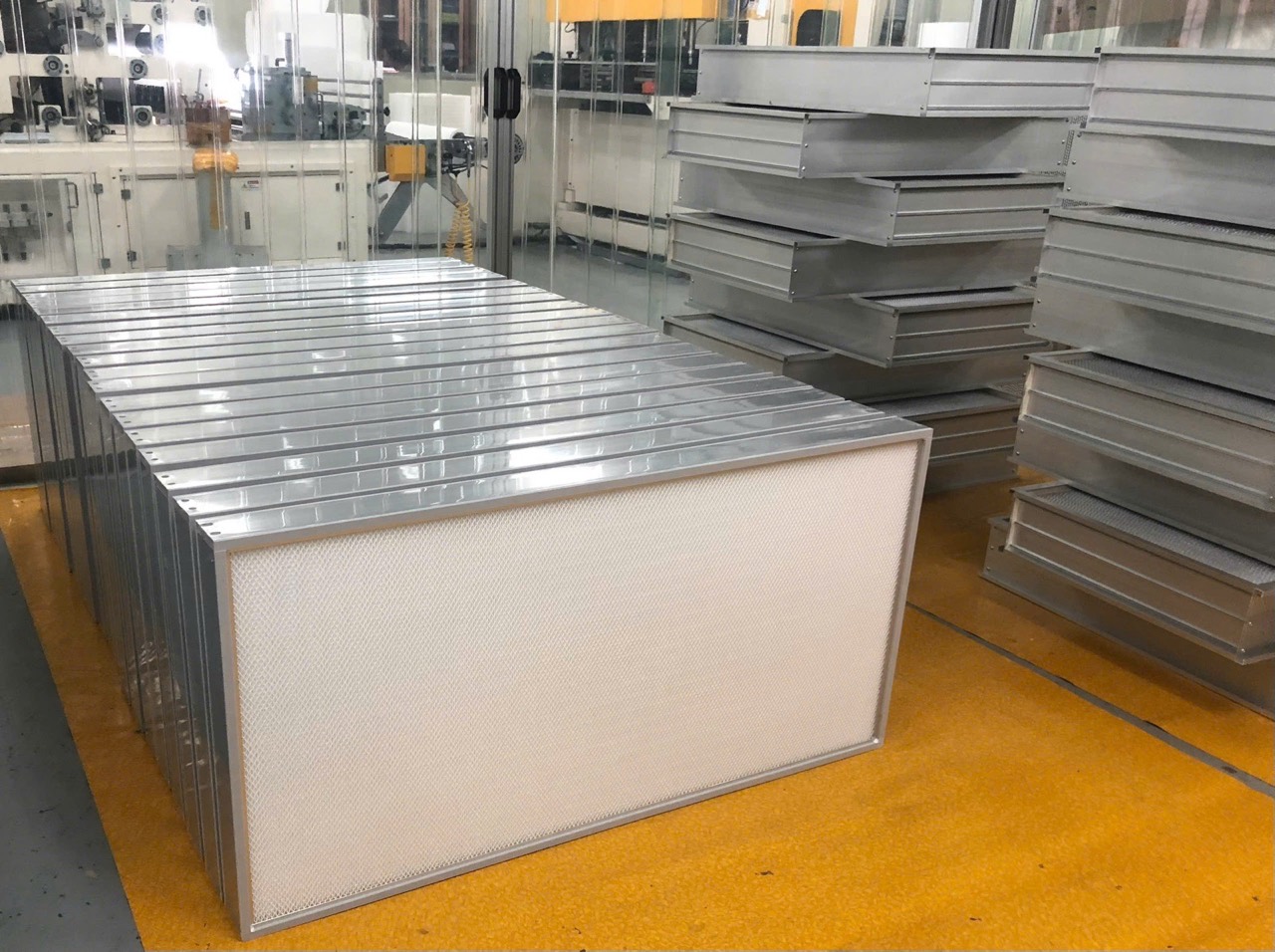
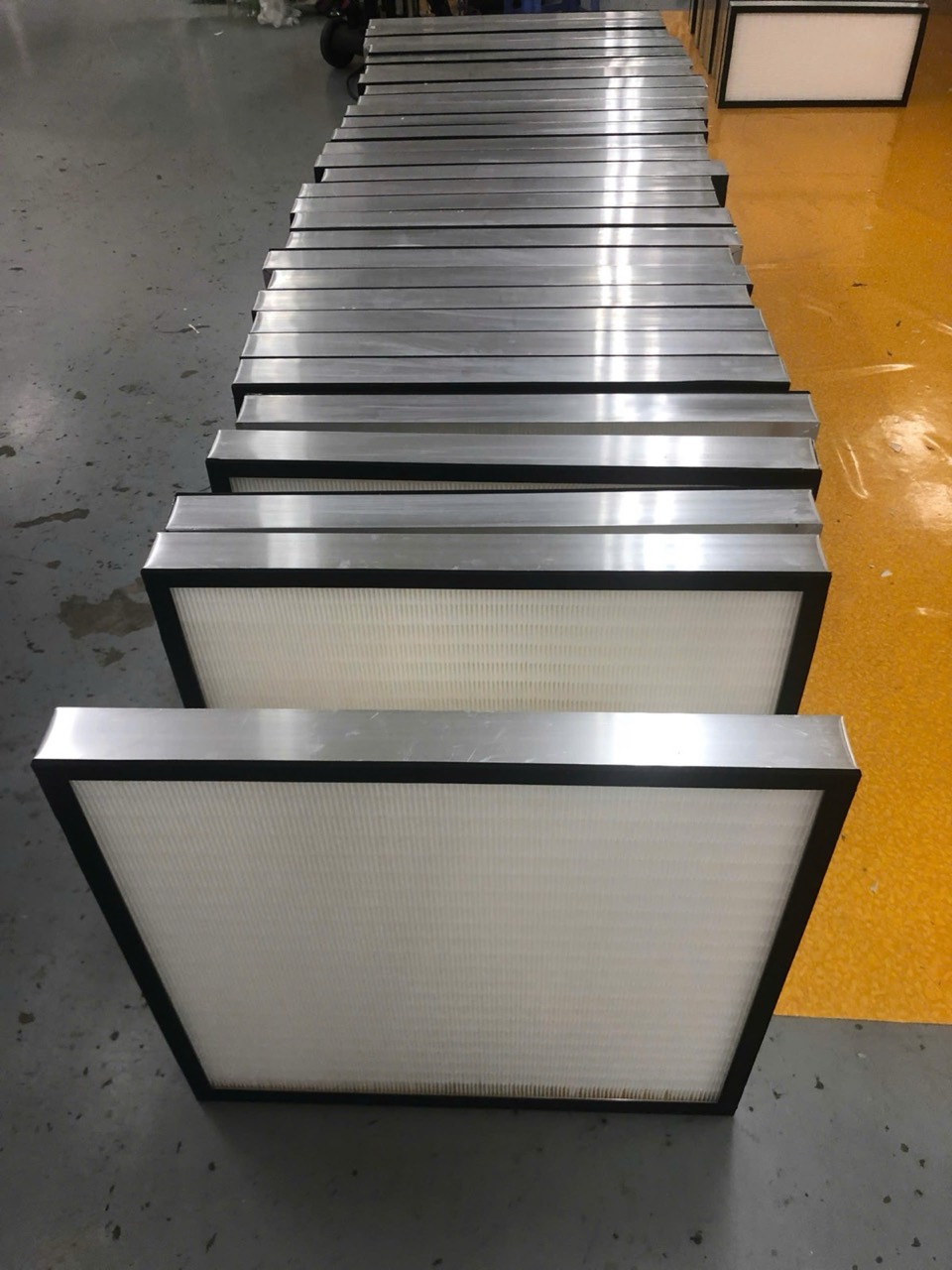
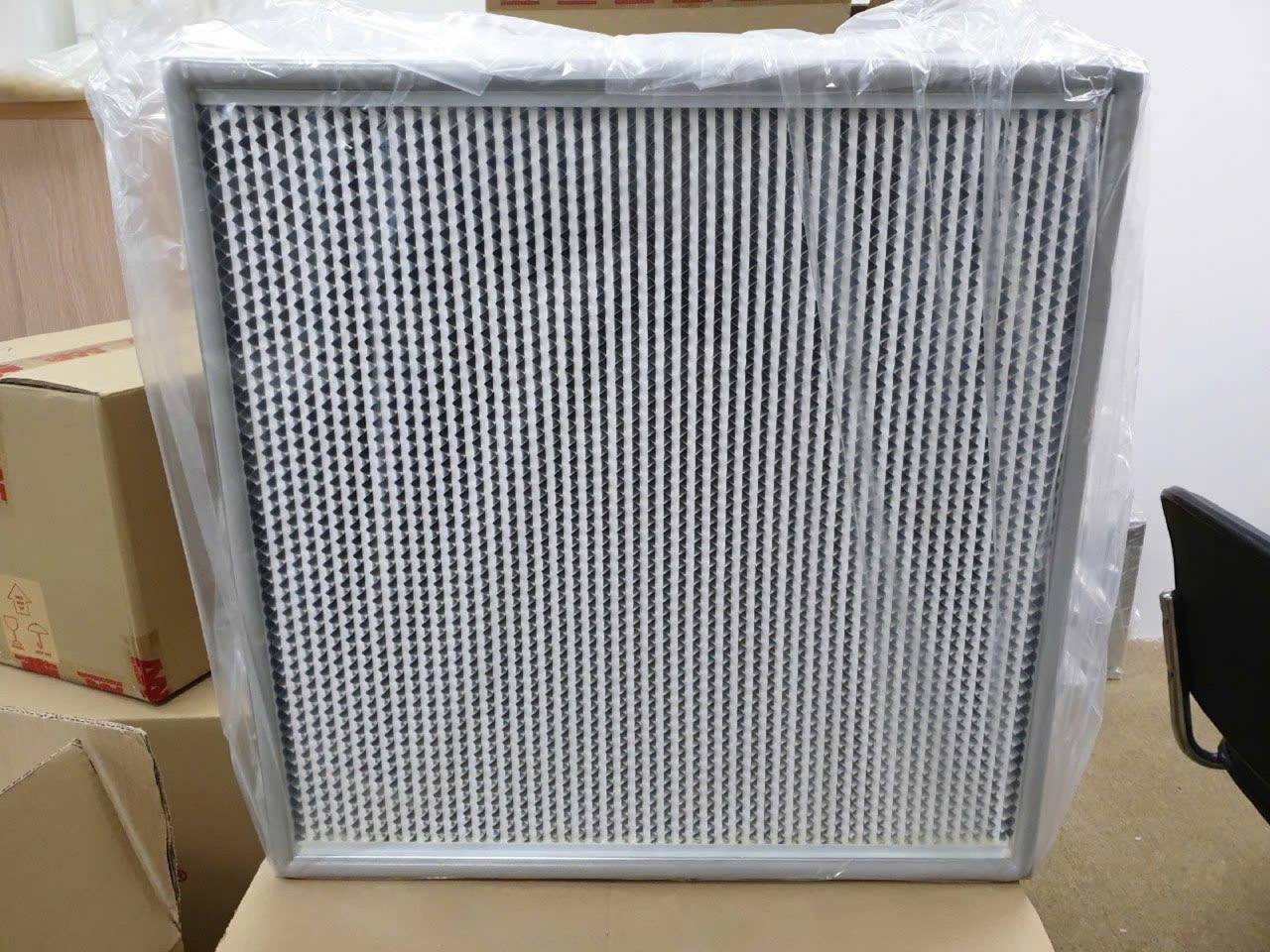
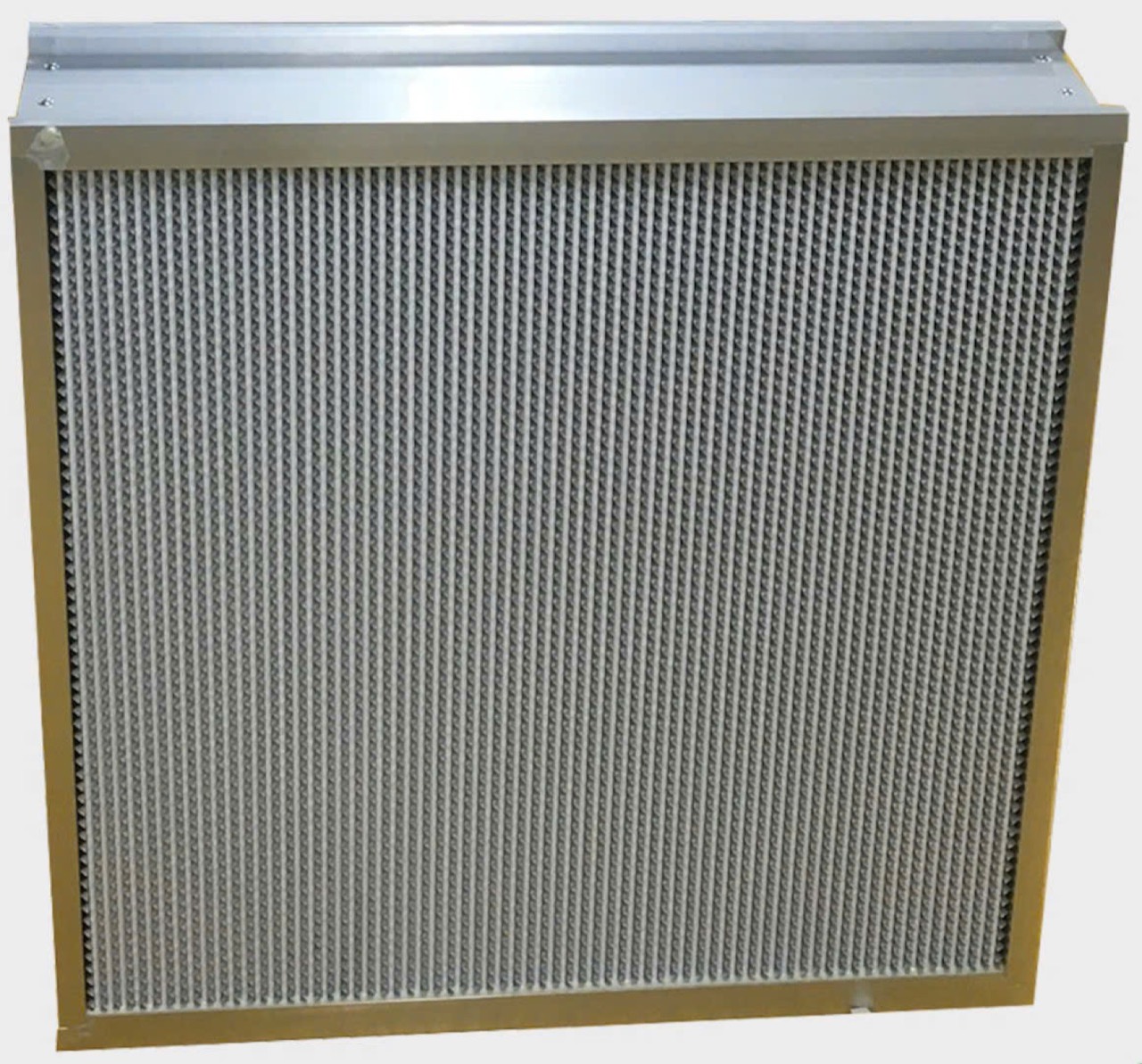
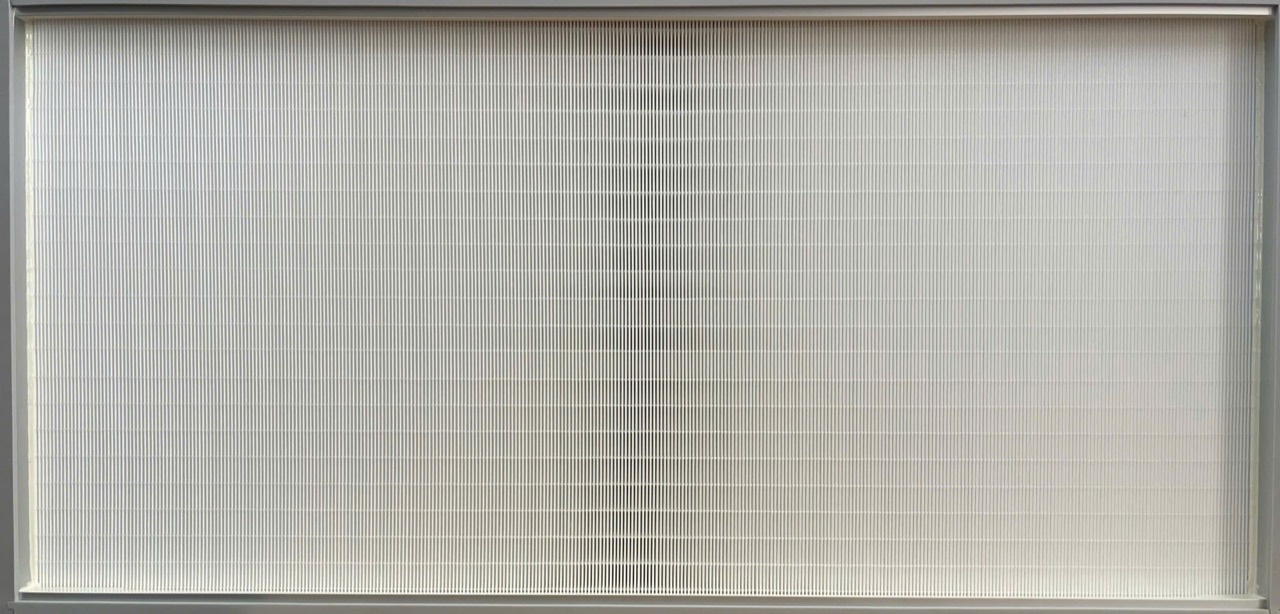
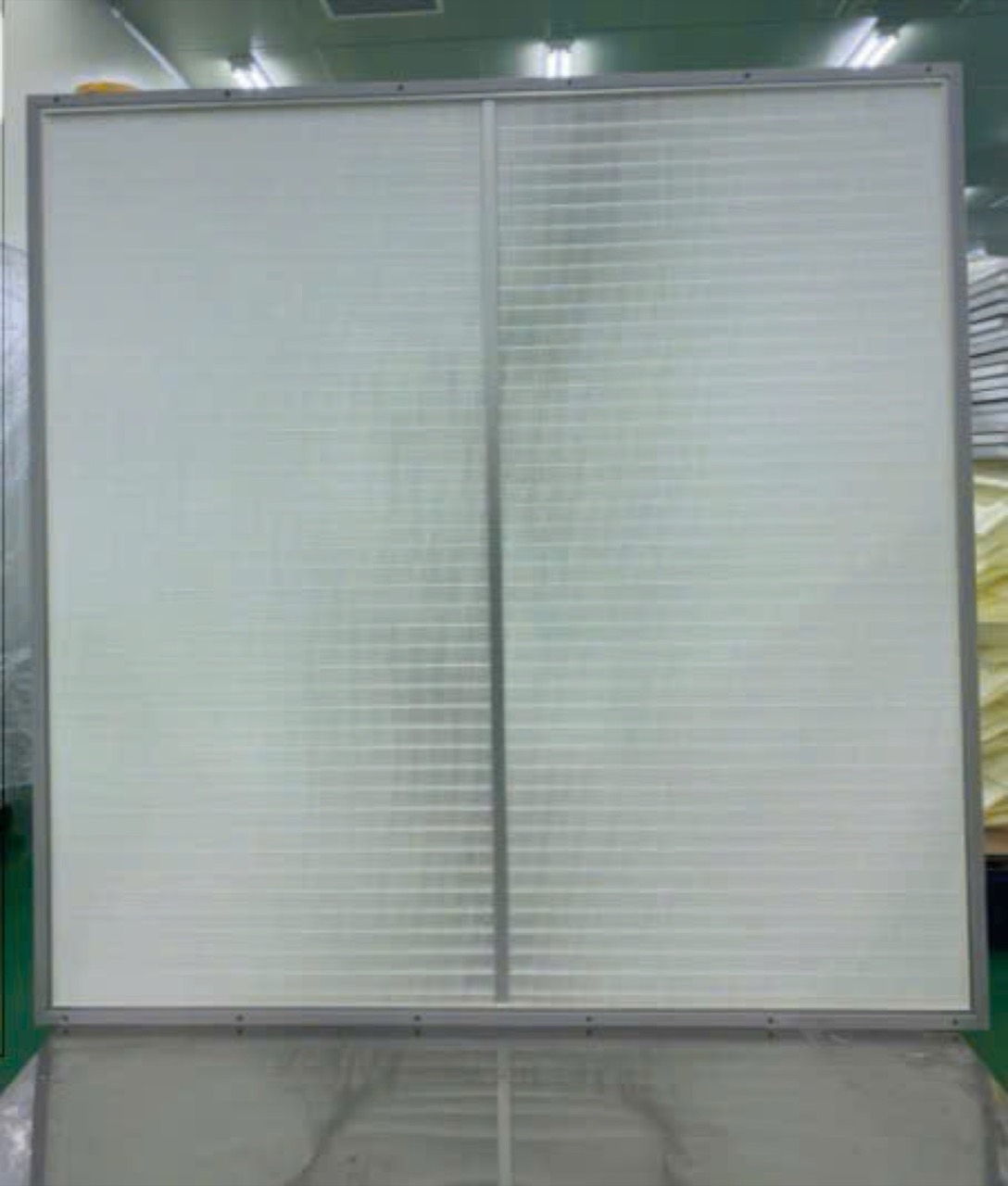
ULPA Filter
| Standard | EN 1822-1:2009 |
|---|---|
| Grade range | U15 – U17 |
| Efficiency at MPPS | ≥ 99.9995% (U15) — ≥ 99.999995% (U17) |
| Test particle | ~0.12 µm (MPPS) |
| Min intrusive particle | 120 nanometres |
What is a ULPA Filter?
ULPA (Ultra-Low Penetration Air) filters can be described as ultra-fine particulate filters.
A ULPA filter removes at least 99.999% of dust, pollen, mould, bacteria, and any airborne particle down to a minimum intrusive particle size of 120 nanometres (0.12 µm) — the ultra-fine range. ULPA filters near-absolutely (but not 100%) remove oil smoke, cigarette smoke, resin smoke, fume dust, and pesticide dust. They are also somewhat effective against soot.
How a ULPA Filter Works
ULPA and HEPA share the same fundamental design and operating mechanism: the filter medium is a dense network of randomly arranged fibres. As air passes through this dense web, solid particles adhere to the fibres and are removed from the airflow.
Performance depends on contaminant particle size, captured through four combined techniques (one more than HEPA):
- Sieving
- Diffusion
- Inertial impaction
- Interception
Compare ULPA Grades (EN 1822-1:2009)
Choosing a ULPA Grade by Cleanroom Class
- Class 1,000 to 100 (GMP Class A & B) → ULPA U15
- Class 1 to 10 → ULPA U17
- Filter media: dense network of randomly arranged synthetic / glass fibres.
- Four capture mechanisms work in combination: sieving, diffusion, inertial impaction, interception — the added sieving mode is what distinguishes ULPA from HEPA.
- Removes near-absolute (but not 100%) of pollen, mould, bacteria, oil smoke, cigarette smoke, resin smoke, pesticide dust; somewhat effective against soot.
- Individually scan-tested — local efficiency is reported per unit.