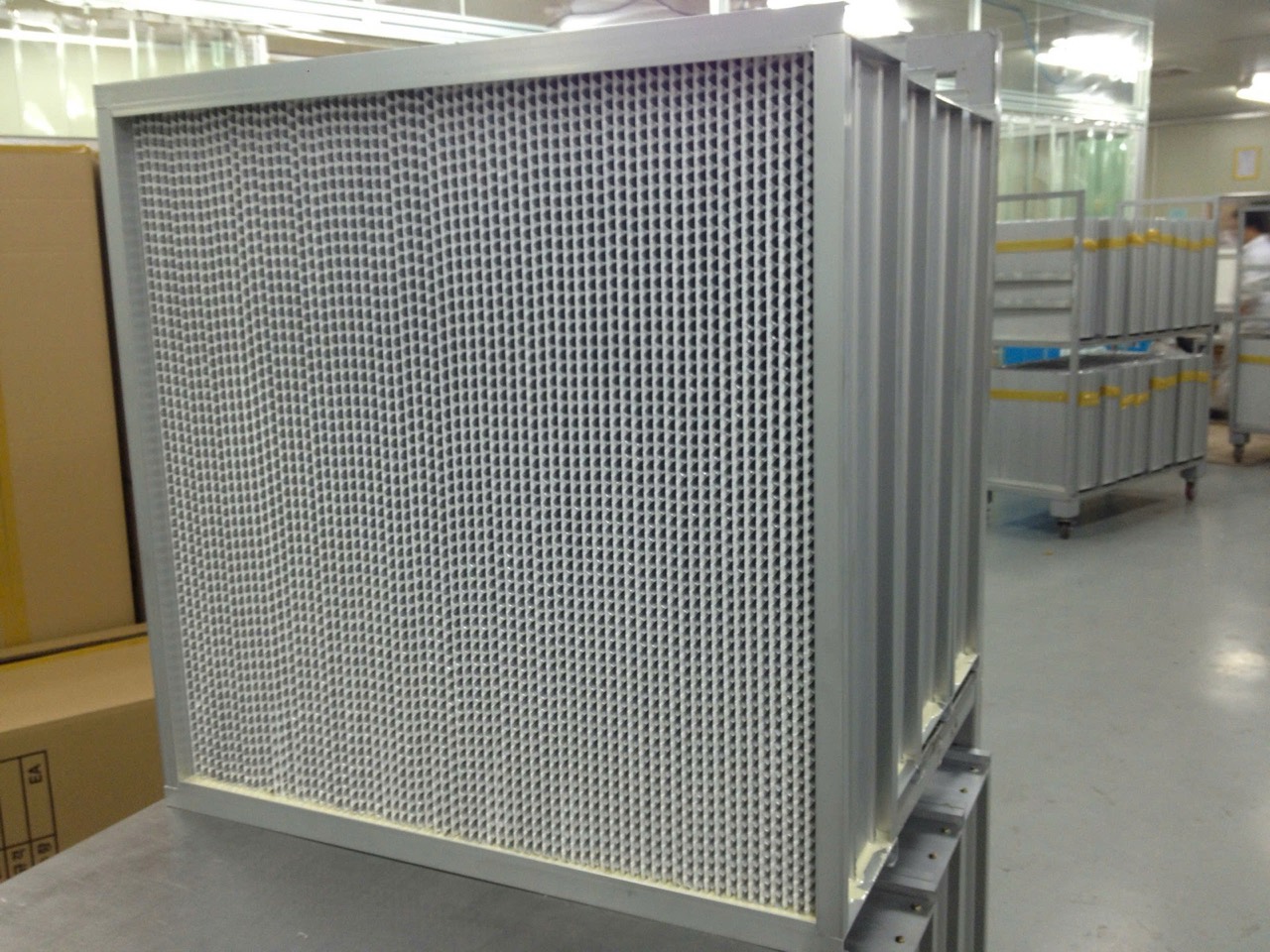

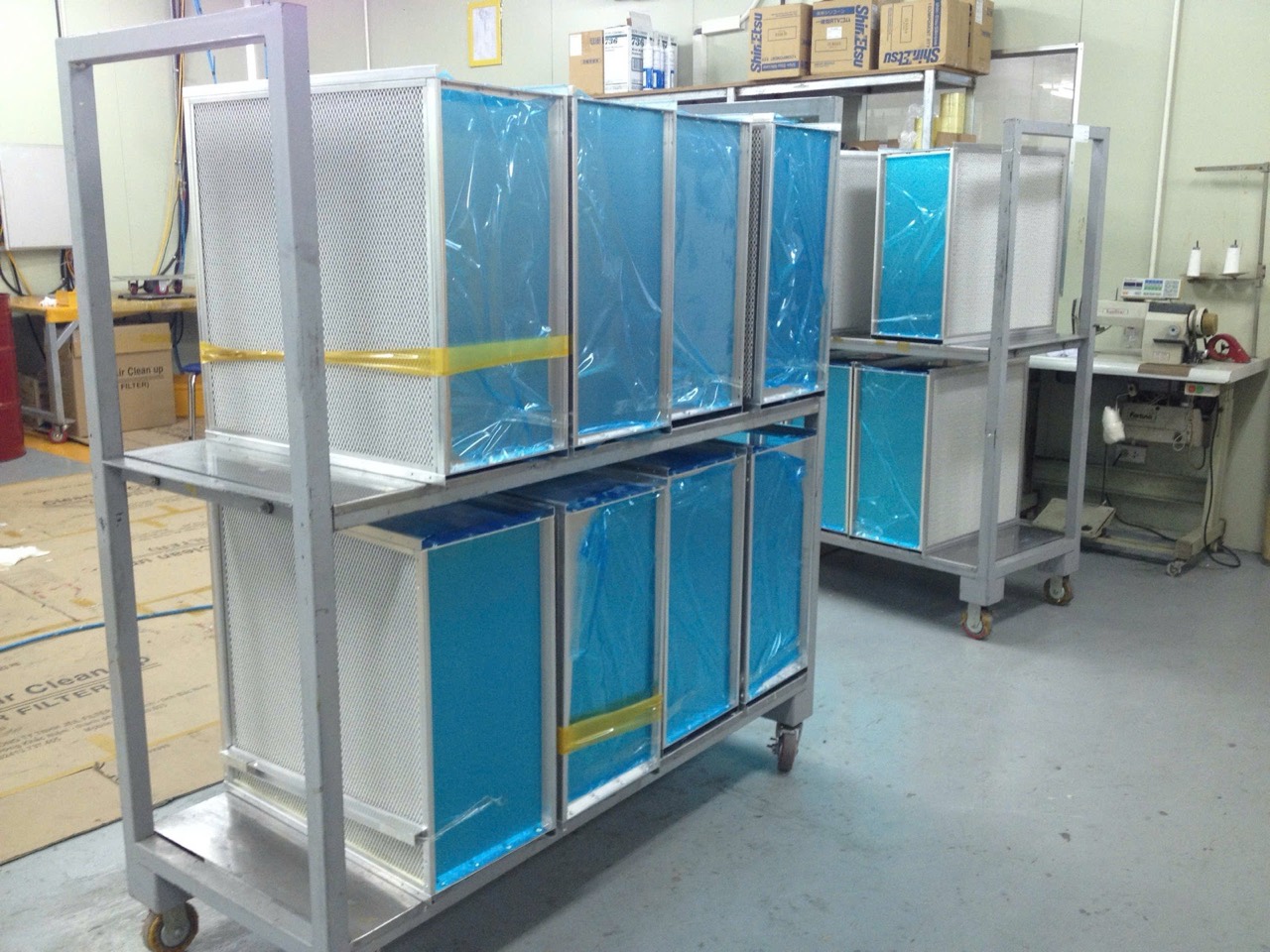
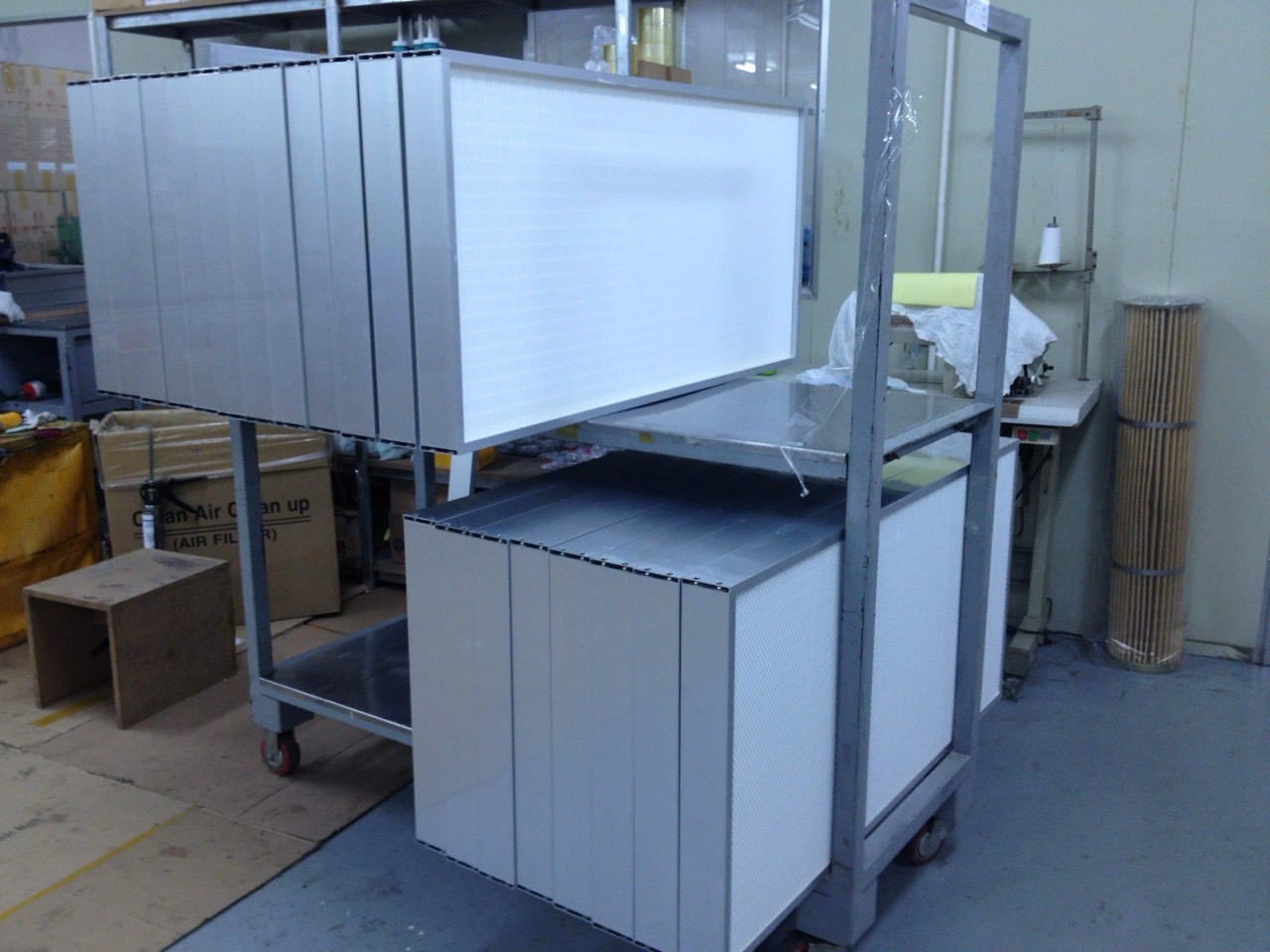
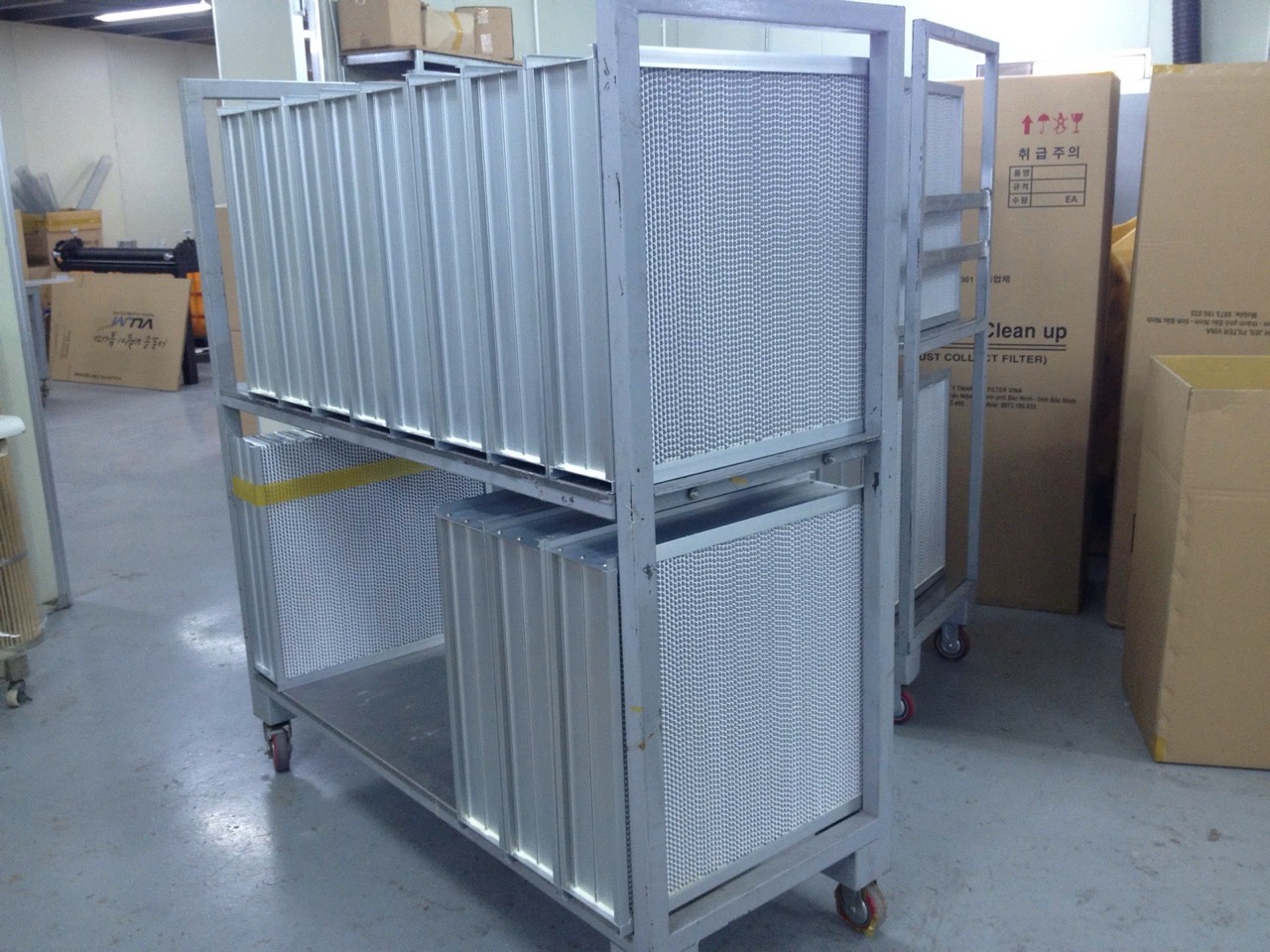
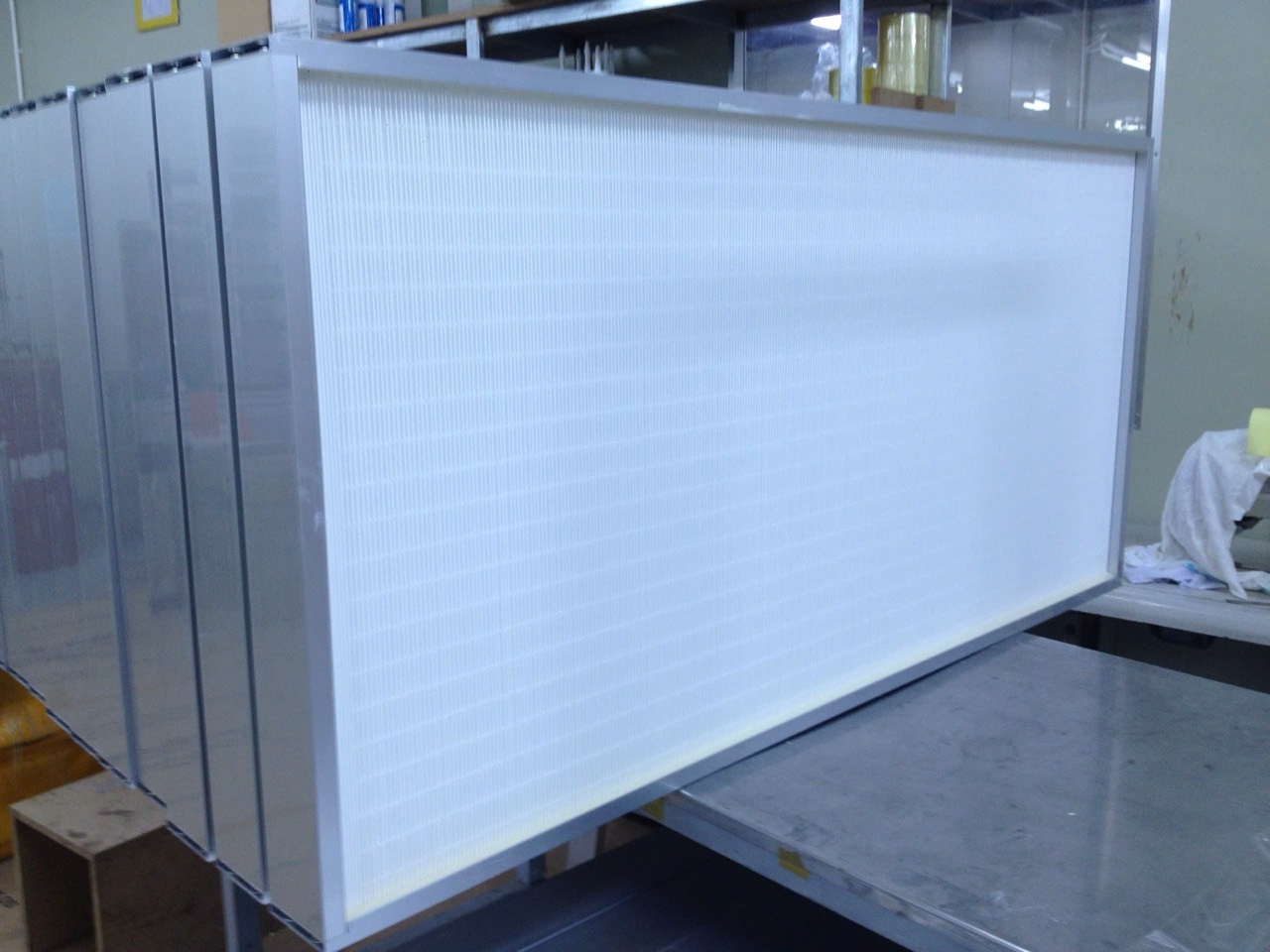
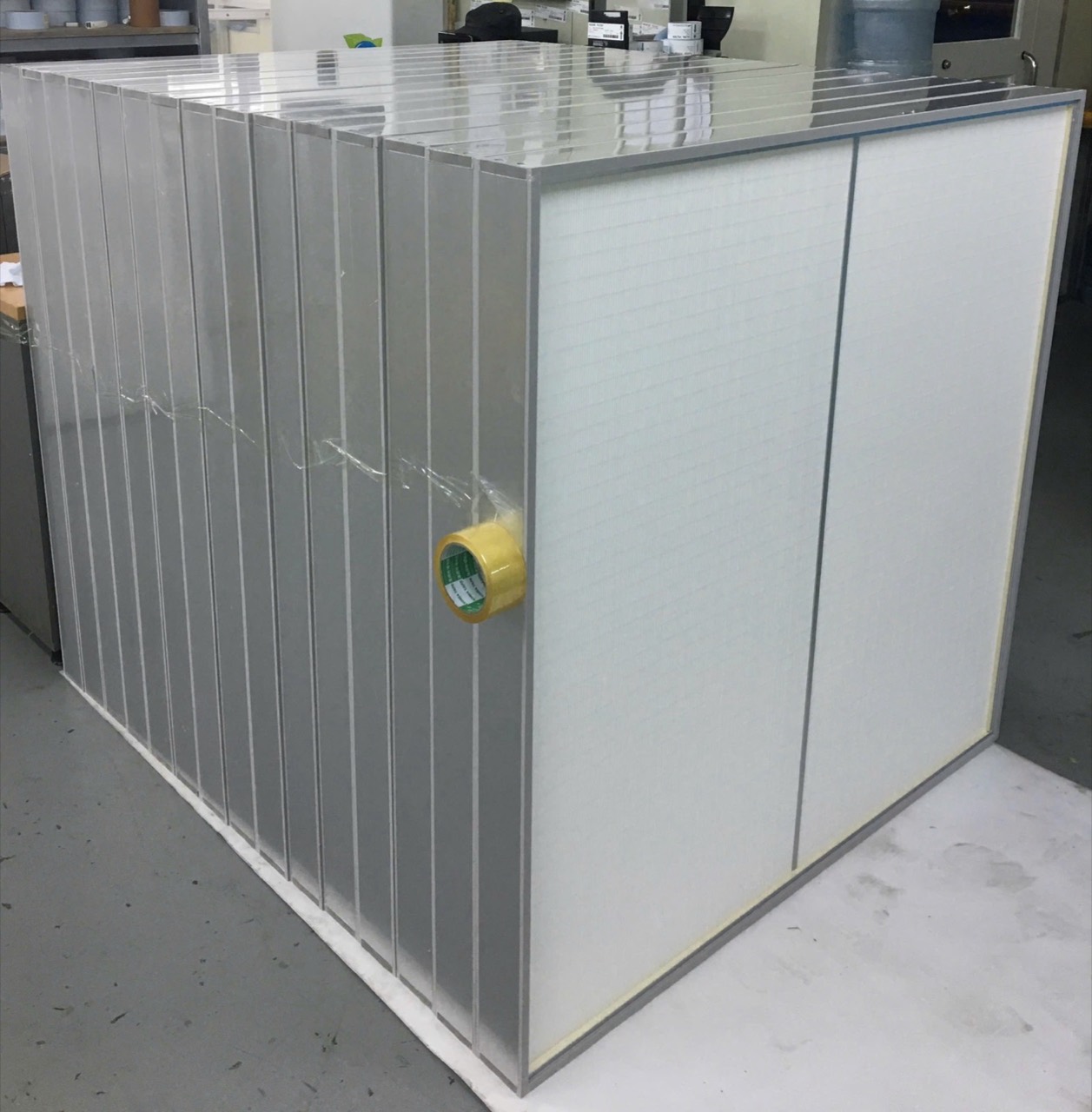
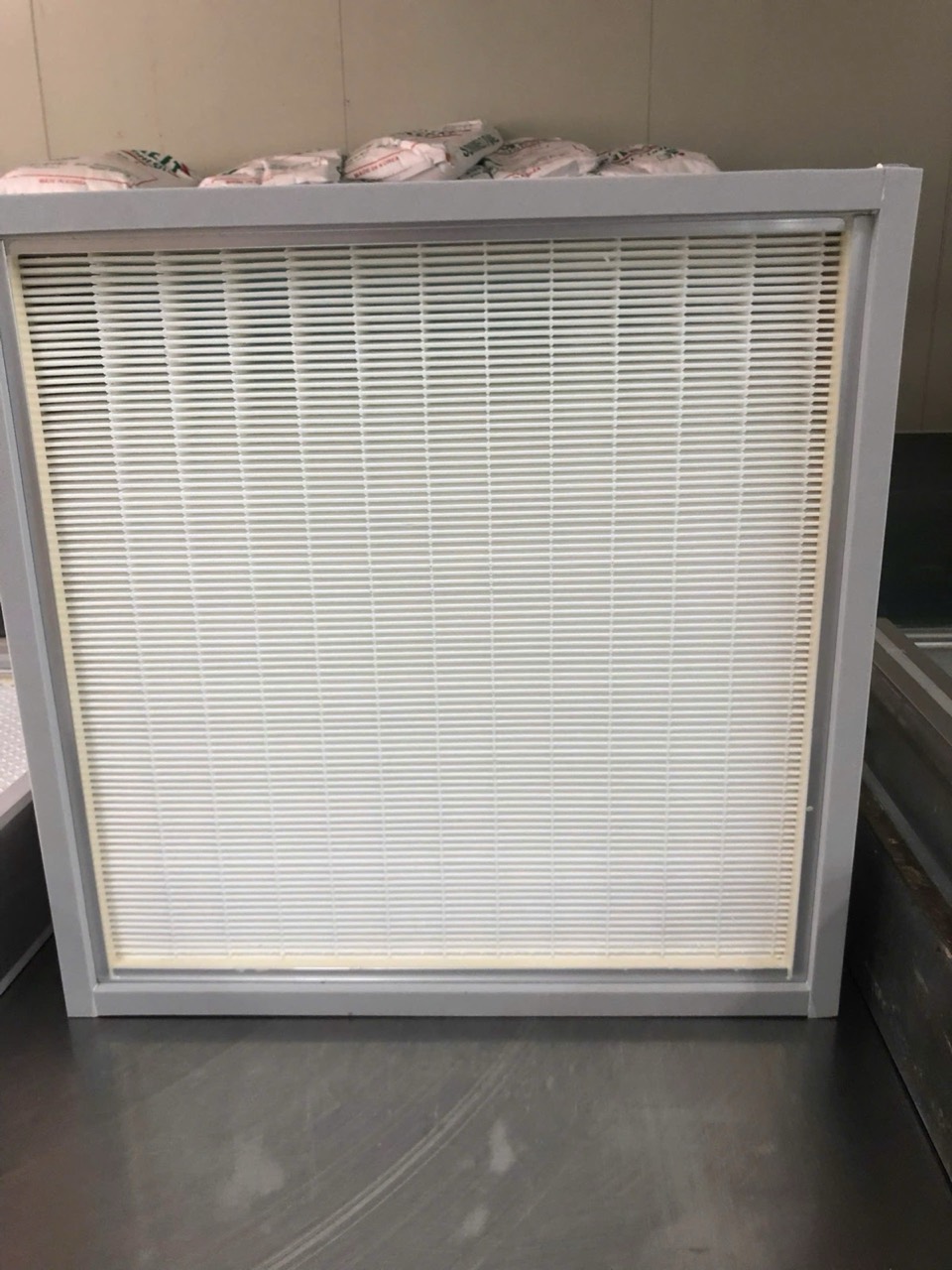
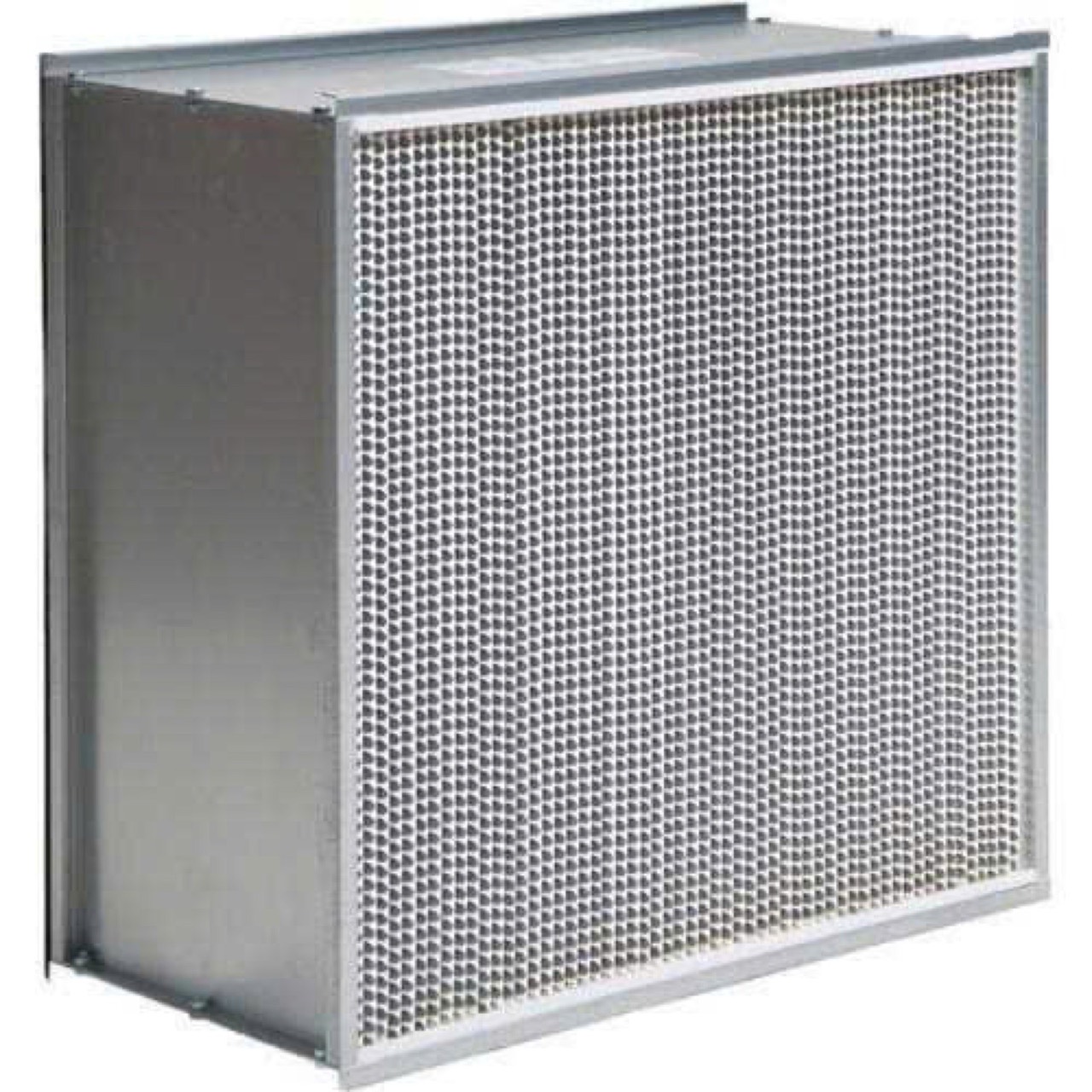
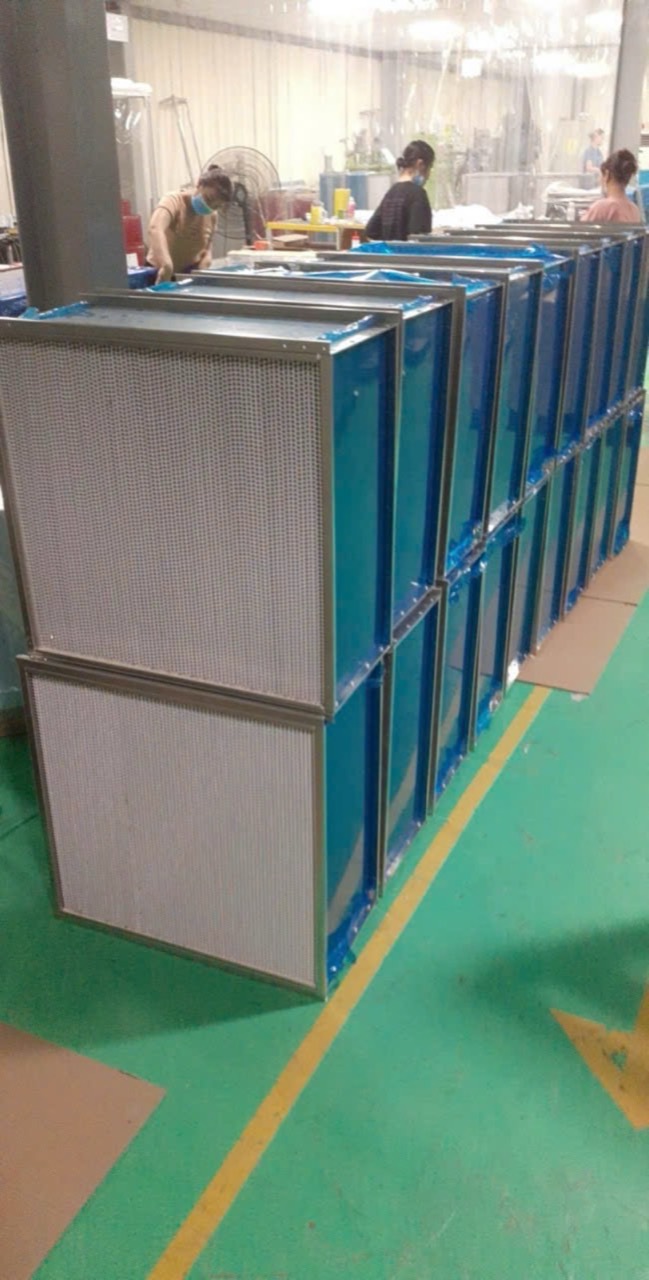
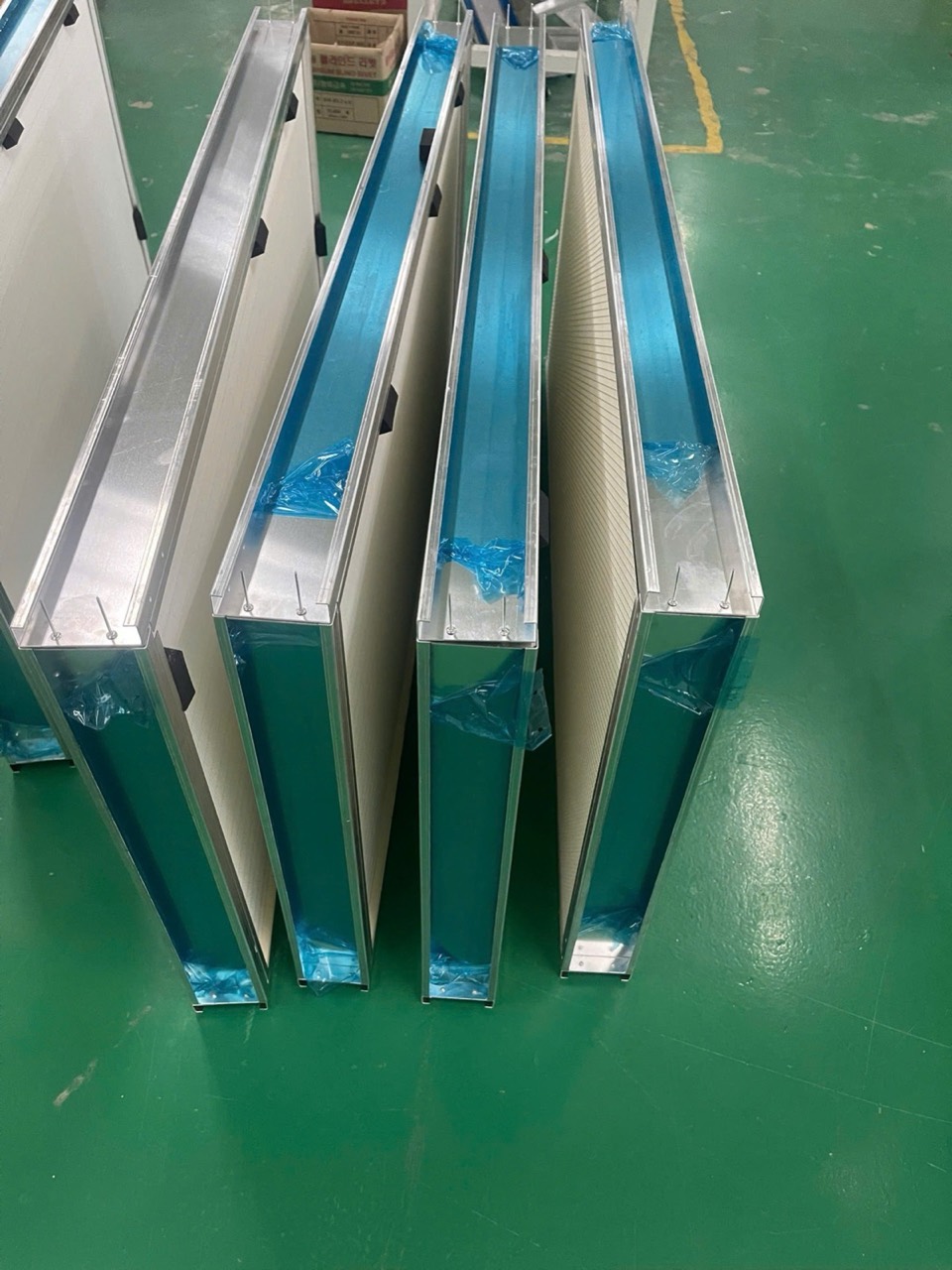
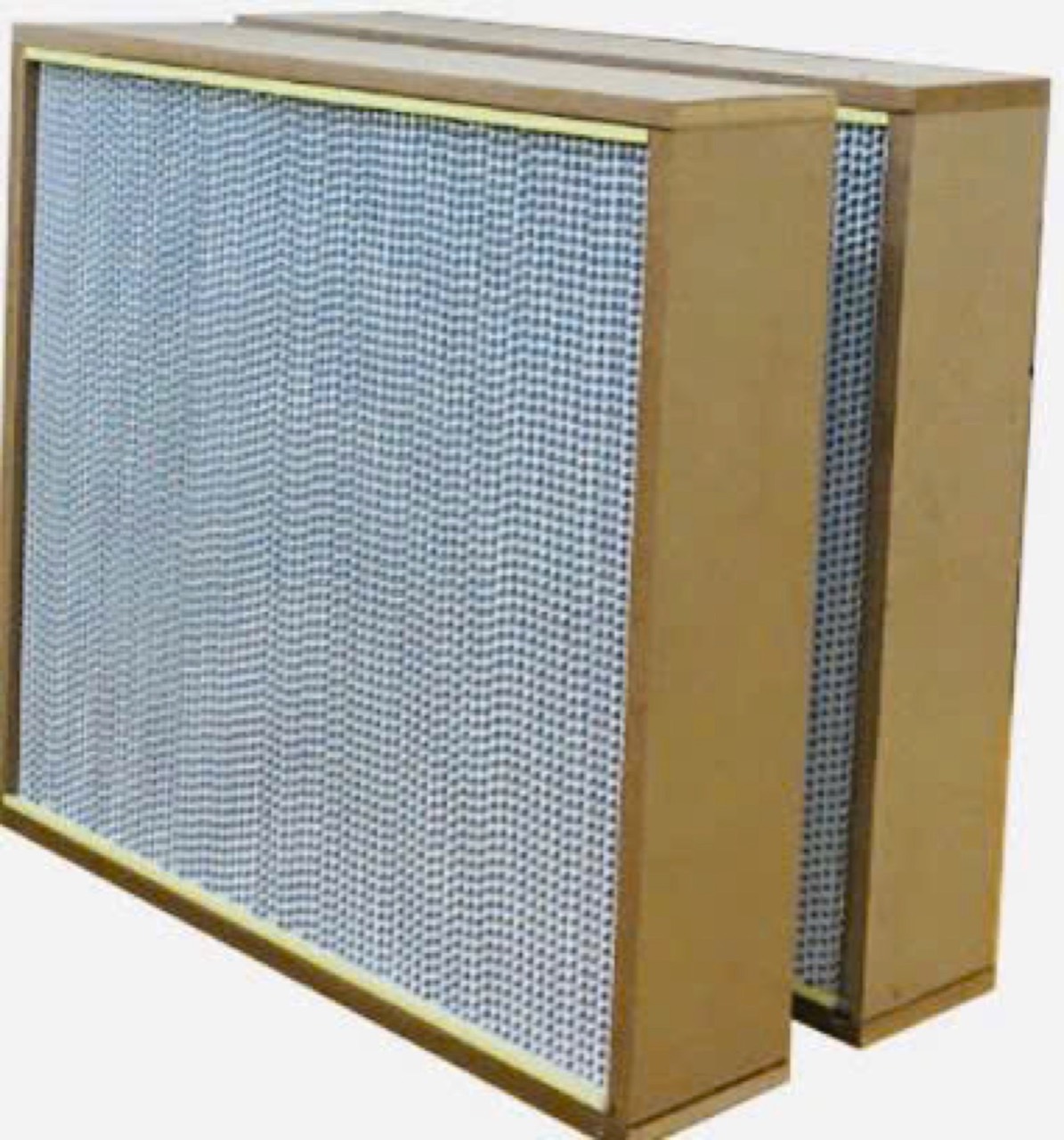
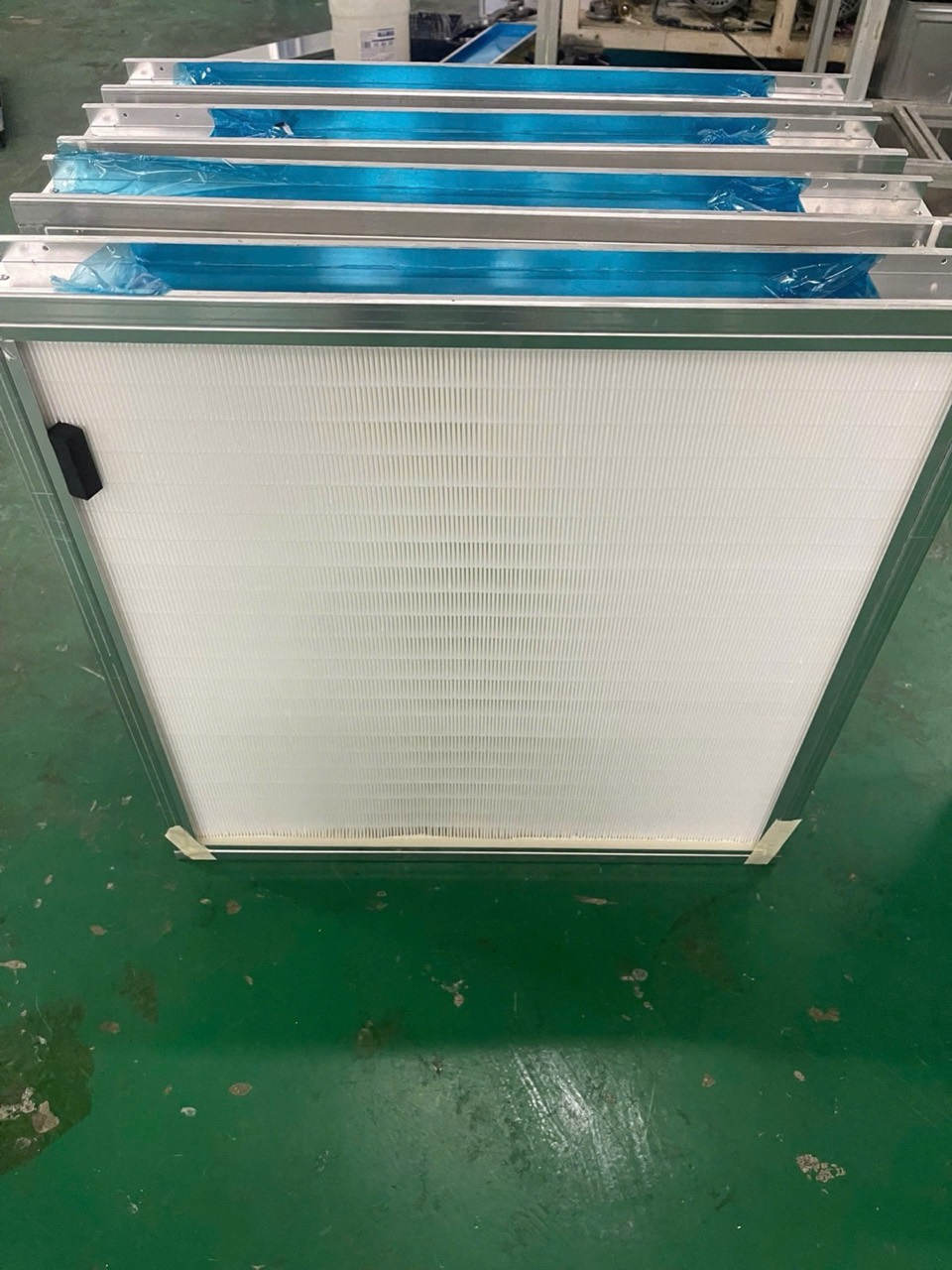
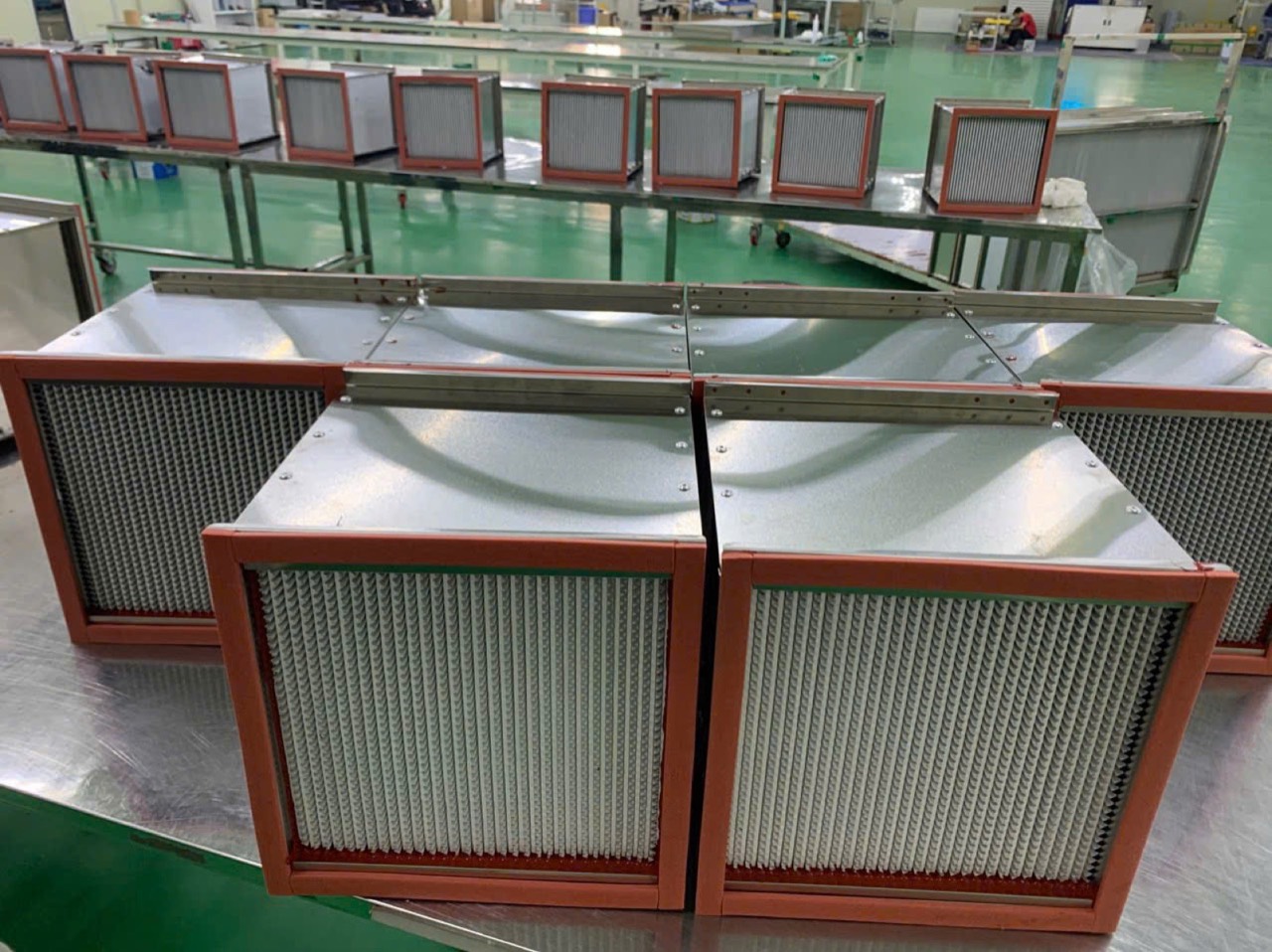
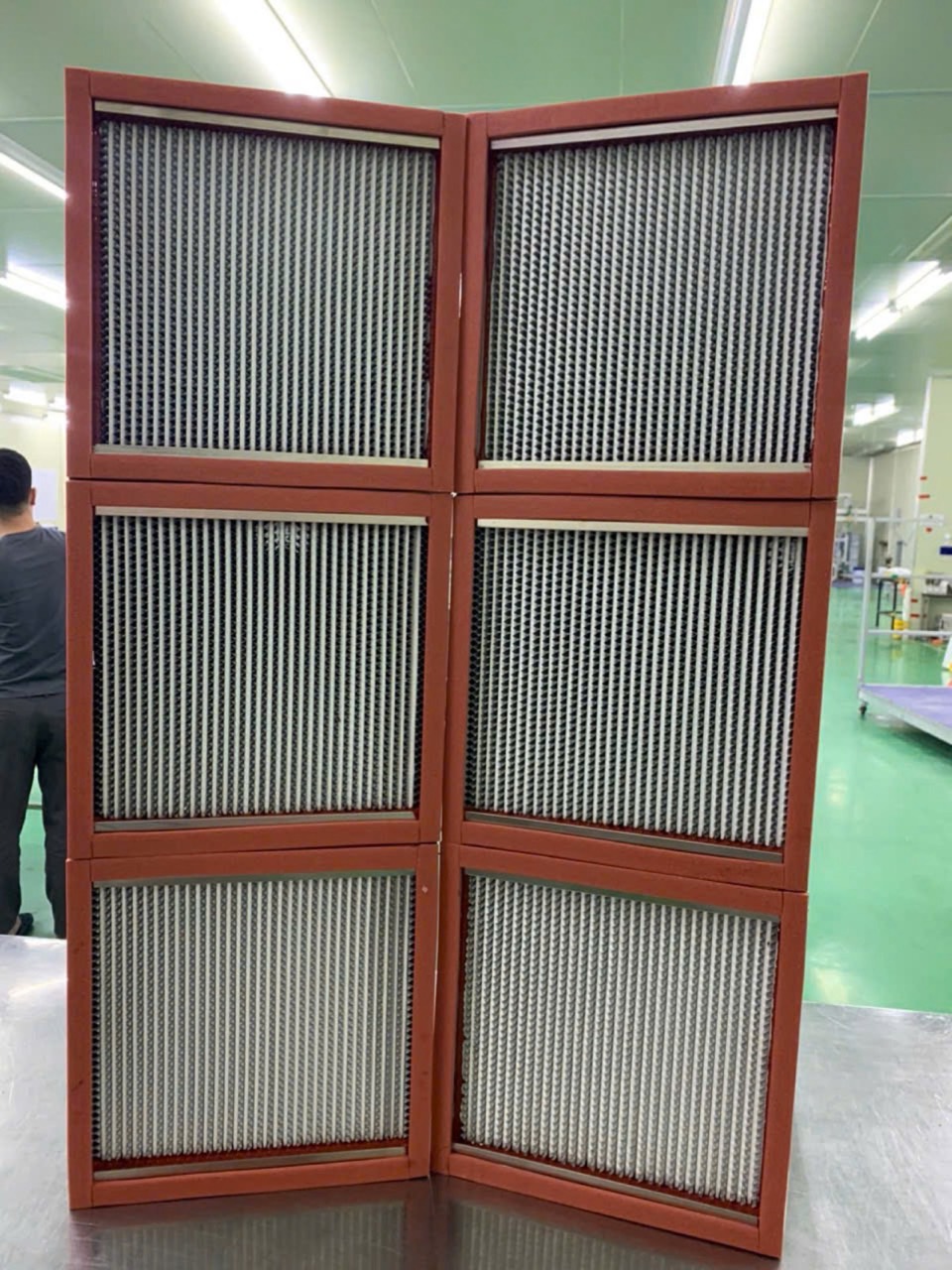
HEPA Filter
| Standard | EN 1822-1:2009 |
|---|---|
| Grade range | H10 – H14 |
| Efficiency at MPPS | ≥ 85% (H10) — ≥ 99.995% (H14) |
| Test particle | ~0.3 µm (MPPS) |
| Construction | Panel / Box / V-bank |
What is a HEPA Filter?
HEPA (High Efficiency Particulate Air) filters meet a standard that defines a minimum air-filtration efficiency. HEPA filters capture 99.95% of particles 0.3µm and larger per the European standard, or 99.97% per the US standard.
HEPA filters are used to clean air in disk drive manufacturing, medical-device production, semiconductor & camera fabrication, displays, nuclear-equipment production, pharmaceutical and food production — and they are equally common in hospitals, residential air purifiers, and transportation. HEPA filters effectively capture pollen, mould spores, animal dander, smoke — particles that trigger asthma and respiratory allergies in humans — and are also effective against PM2.5 fine dust.
How a HEPA Filter Works
A HEPA filter is essentially a mesh of randomly arranged fibres, typically glass fibres or non-woven synthetic fibres 0.5–2.0 µm in diameter. The two most important factors that determine filtration ability are fibre thickness and face velocity (wind speed at the filter face). The visible gaps between HEPA fibres are usually larger than 0.3 µm — yet the filter still captures particles much smaller, because the particles get trapped and stick to the fibres through three combined mechanisms:
- Diffusion — collisions between small particles (<0.1µm) and air molecules cause the particles to follow a zig-zag (Brownian) path, increasing the probability of impacting and sticking to a fibre. This mechanism is most effective at low airflow.
- Inertial impaction — large, high-inertia particles cannot follow the airflow around the fibres; they impact the fibre directly and adhere. This effect strengthens as fibre gaps narrow and airflow accelerates.
- Interception — particles travelling along the airflow strike a fibre or fibre intersection in passing and are captured.
Compare HEPA Grades (EN 1822-1:2009)
Choosing a HEPA Grade by Cleanroom Class
- Class 100,000 (GMP Class D) → HEPA H13
- Class 10,000 (GMP Class C) → HEPA H14
- Filter media: glass or non-woven synthetic fibres, 0.5–2.0 µm diameter, randomly arranged.
- Three capture mechanisms: diffusion (best for <0.1µm), inertial impaction (best for large particles), interception.
- Individually scan-tested from H13 upward — local efficiency reported per unit.
- Applications: disk drives, medical devices, semiconductor, displays, nuclear, pharma, food, hospitals, residential, transportation.
- Effective against PM2.5, pollen, mould spores, animal dander, and smoke.